Why Cloud Compliance Still Fails: The Case for a Federated Inventory
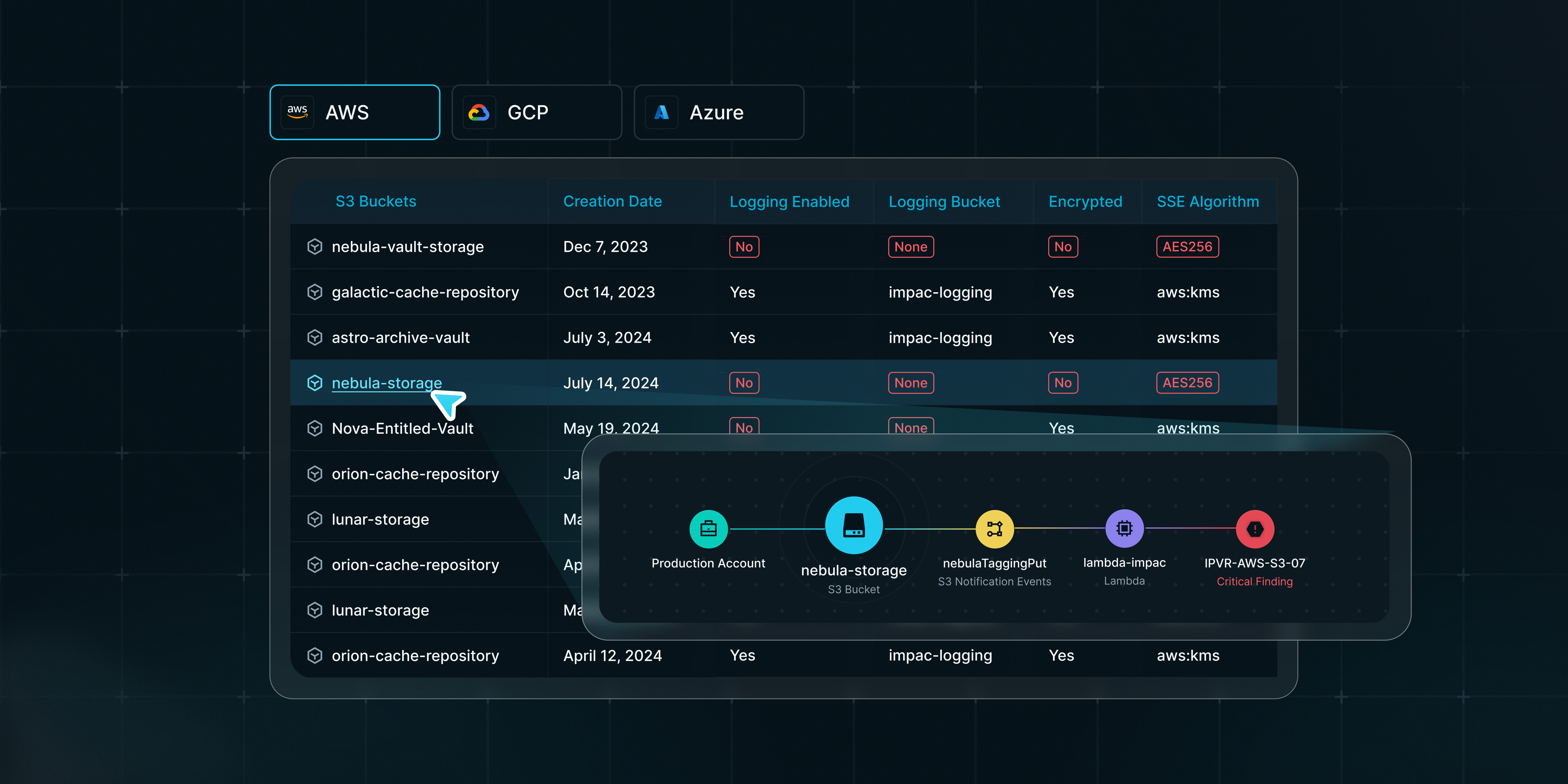
A federated inventory doesn't just list resources; it understands their relationships and dependencies.
## The Compliance Failure Mode
Every year, organizations invest millions in cloud compliance:
- GRC platforms for policy management
- CSPM tools for configuration scanning
- Manual processes for evidence collection
- Consultants for audit preparation
Yet compliance failures persist. Why?
Because **compliance requires inventory**, and most inventory approaches are fundamentally broken.
## The Inventory Problem
Traditional asset inventory falls short in three ways:
### 1. Static Snapshots
Most inventory tools provide point-in-time snapshots. But clouds change constantly—resources spin up and down, configurations drift, relationships evolve. Yesterday's inventory is already outdated.
### 2. Siloed Views
Each cloud provider has its own inventory system. AWS Config, Azure Resource Graph, GCP Asset Inventory. Each gives a partial view. None shows the complete picture.
### 3. Missing Relationships
Listing resources isn't enough. Compliance requires understanding how resources relate:
- Which IAM roles can access which data?
- What encryption keys protect which storage?
- How do changes in one resource affect others?
Traditional inventory can't answer these questions.
## The Federated Inventory Solution
A federated inventory solves these problems:
### Continuous, Not Snapshot
Instead of periodic scans, a federated inventory tracks changes as they happen. Every configuration modification is captured and recorded.
### Unified, Not Siloed
A federated inventory spans all cloud providers from a single platform. AWS, Azure, and GCP resources appear in one view with consistent metadata.
### Relational, Not Flat
A federated inventory is a graph, not a list. It shows how resources connect, depend on each other, and inherit risk.
## How imPAC Delivers Federated Inventory
### Asset Chain
Asset Chain creates a federated inventory that spans your entire cloud estate. It maps every resource and relationship across providers, updated continuously.
### Time Machine
Time Machine adds the temporal dimension. See your inventory at any point in time. Track how it evolved. Compare states.
### Compliance Mapping
Map your federated inventory to compliance frameworks automatically. Know which resources fall under which controls, and whether they're compliant.
### Evidence Generation
Generate audit evidence directly from your federated inventory. No more screenshot collections—just accurate, timestamped data.
## The Result
With a federated inventory:
- **Auditors** get accurate, real-time views instead of stale spreadsheets
- **Security teams** understand relationships and risk propagation
- **Compliance managers** map controls to actual resources, not theoretical architectures
- **Executives** get confidence that compliance is real, not theater
---
Stop failing at compliance. Start with inventory.
[See how imPAC's federated inventory works](/request-demo)